Group Classes Done Right: Why KBX Runs Six Formats
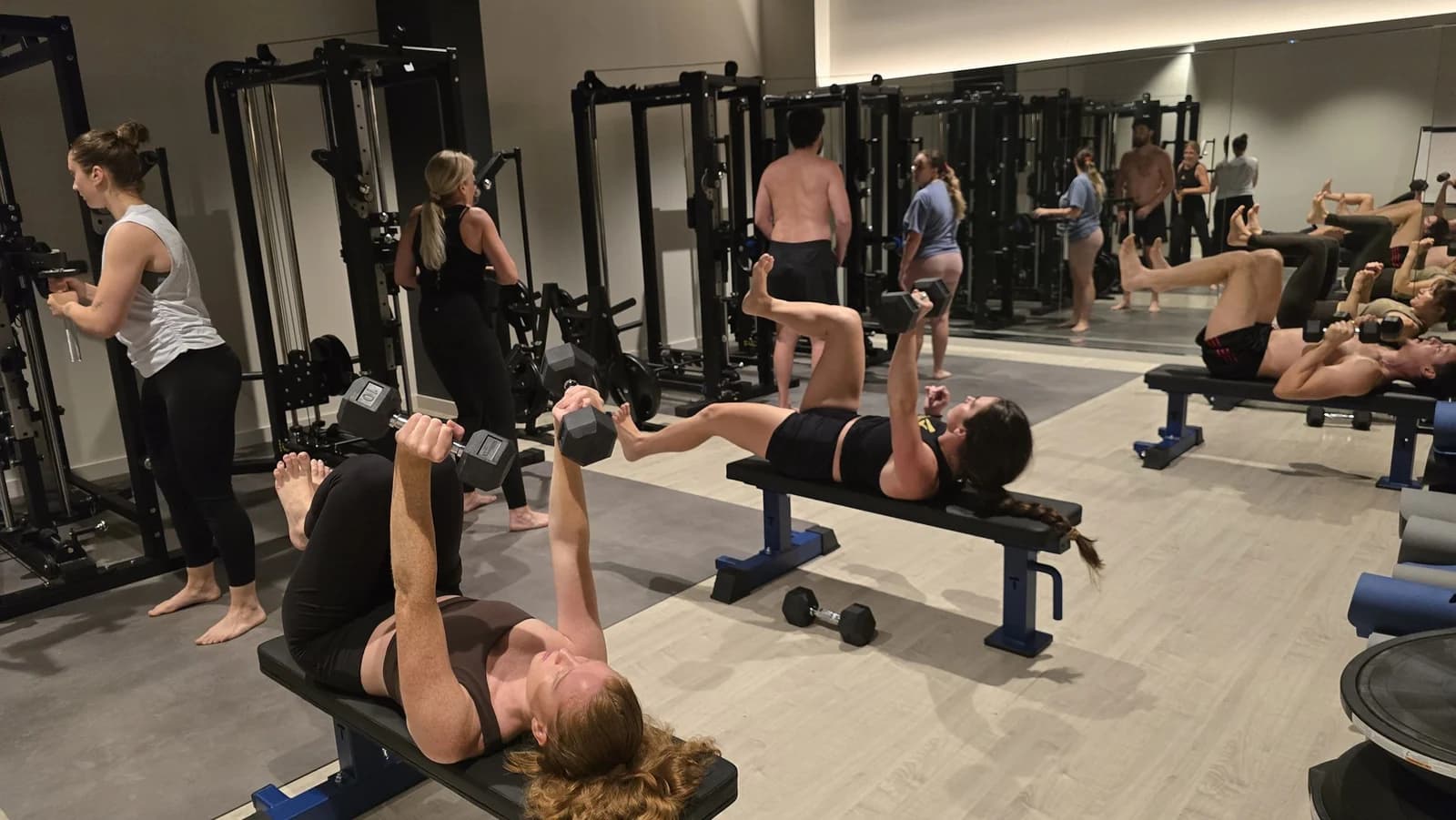
Most group classes train the room. One routine, twenty people, one or two coaches, and the person with the collapsed arch does the same lunges as the person with the stiff hip. Functional Patterns has written about why that fails, and they're right. KBX is our answer: six Functional Patterns formats, every class capped so a practitioner can correct individual mechanics, and an assessment first so you land in the format your pattern needs.
Key takeaways
- The problem with group classes isn't the group. It's the one-size programme and the lack of eyes on you.
- Programme type decides the result. Strength and coordination work beats generic work in the research.
- Supervision, feedback and progress monitoring are what keep people training. A capped class has all three.
- Six formats, one system. The assessment picks the format, not the schedule.
In this article
- What Functional Patterns gets right about group classes
- What the research says about why design matters
- The six formats, and what each one is for
- How a class works when the person comes first
- Who this is for
- Where this piece comes from
What Functional Patterns gets right about group classes
Functional Patterns published a piece on group classes that names four problems: the wrong priorities, where competition and the vibe outrank health; little focus on the individual; no individualised programming, so a restricted ribcage or a tilted pelvis gets the same routine as everyone else; and neglect of the fundamental movement patterns. Their conclusion is that an individualised, structured approach beats a class.
We run classes, and we agree with most of that. The problems they describe are real. They're also problems with how most classes are run, not with the fact of a group. A capped room, a practitioner watching mechanics, and a format chosen by assessment solves three of the four. The fourth, the fundamentals, is what every KBX format is built on.
What the research says about why design matters
Two findings decide how a class should be built, and neither is about effort.
The first is that programme type decides the result. A 2015 meta-analysis of 39 trials on chronic low back pain (PMID 25681408) found that strength and resistance programmes and coordination and stabilisation programmes beat other treatments, while cardio alone and generic combined programmes didn't. The same shape shows up at the shoulder, where a 2017 review (PMID 28630217) found specific exercises beat generic ones. A class that's "a bit of everything" is the generic programme those reviews found wanting.
The second is that the thing that makes people keep training is structure, not hype. An umbrella review of 55 reviews (PMID 33669679) identified fourteen factors that raise adherence, each named by at least ten reviews. Supervision. Communication and feedback. Available progress information and monitoring. Social support. Enjoyment, with an absence of unpleasant experiences. Read that list against a packed class with one coach and a playlist, and then read it against a capped class where a practitioner knows your assessment.
The six formats, and what each one is for
Every KBX format is Functional Patterns first. The difference is how much load, how much speed, and which patterns each one prioritises.
- IGNITE is the conditioning format, built on the same structural principles as everything else.
- JACKED & STACKED is strength and structure with progressive loading, the format that builds work capacity over a training block.
- FLEX & FLOW is mobility, control and coordination, the format that opens range without losing structure.
- BIORHYTHM pairs movement with breath and rhythm, so the nervous system learns the pattern as well as the muscles do.
- SWEAT & SHRED is the highest-output format, for clients whose pattern already holds under speed.
- ALIGN is posture and myofascial corrective work, the closest thing to a private corrective session in a group setting.
You don't pick before you start. Your assessment maps you to the formats that fit, and the practitioner in the room knows what it found. That's the difference between six formats and six timetable slots.
How a class works when the person comes first
Every client at Kinetic Blueprint starts with a movement assessment. It's not a gate to keep you out of class. It's how we know which class.
If you've an active pain issue, we usually start you privately and move you into KBX once the pattern is stable, because a class is the wrong place to learn a corrective pattern from scratch. If you want to feel how we train before any of that, a KBX drop-in is $50 for any of the six formats. And when you're in, the room is capped so the practitioner can stop and fix a hip or a foot without stopping the class.
Then we re-test. The assessment that put you in ALIGN is the assessment that tells us when you're ready for JACKED & STACKED. The format changes because the numbers changed, not because you got bored.
Who this is for
If you like training with people and you've been told that means settling for a generic workout, this is for you. The group isn't the problem. The programme was.
Start with the Complimentary Consultation, $0, which includes a movement analysis, or book the Foundational Assessment at $279 and get the full read. Founding Memberships with unlimited classes start at $270 a month, and every price is on the pricing and memberships page.
Where this piece comes from
This article builds on Functional Patterns' piece "Group Classes and Functional Patterns: Unmasking Limitations, Seeking Personalization". Functional Patterns is the biomechanics system every practitioner at Kinetic Blueprint is certified in. The critique of generic classes is theirs. The six formats, the research references and the Austin studio are ours.
What the research says about programme design and sticking with it
An umbrella review of 55 reviews identified fourteen factors that raise adherence to exercise, each named by at least ten reviews, including supervision, communication and feedback, available progress information and monitoring, social support, and enjoyment with an absence of unpleasant experiences.
In a meta-analysis of 39 trials on chronic low back pain, strength and resistance programmes and coordination and stabilisation programmes beat other treatments, while cardiorespiratory and generic combined programmes didn't. The type of programme decided the result.
In adults with shoulder impingement, specific exercises outperformed generic exercises for pain.
Frequently asked questions
Are group fitness classes bad for you?
Can I just do classes without an assessment?
Which KBX format should I start with?
What do KBX classes cost?
Get matched to a format
Meet with a movement specialist, discuss your goals and concerns, tour the studio, and learn how our assessment and training process can help you move better.