The Kinetic Blueprint Method
Measure, Map, Move
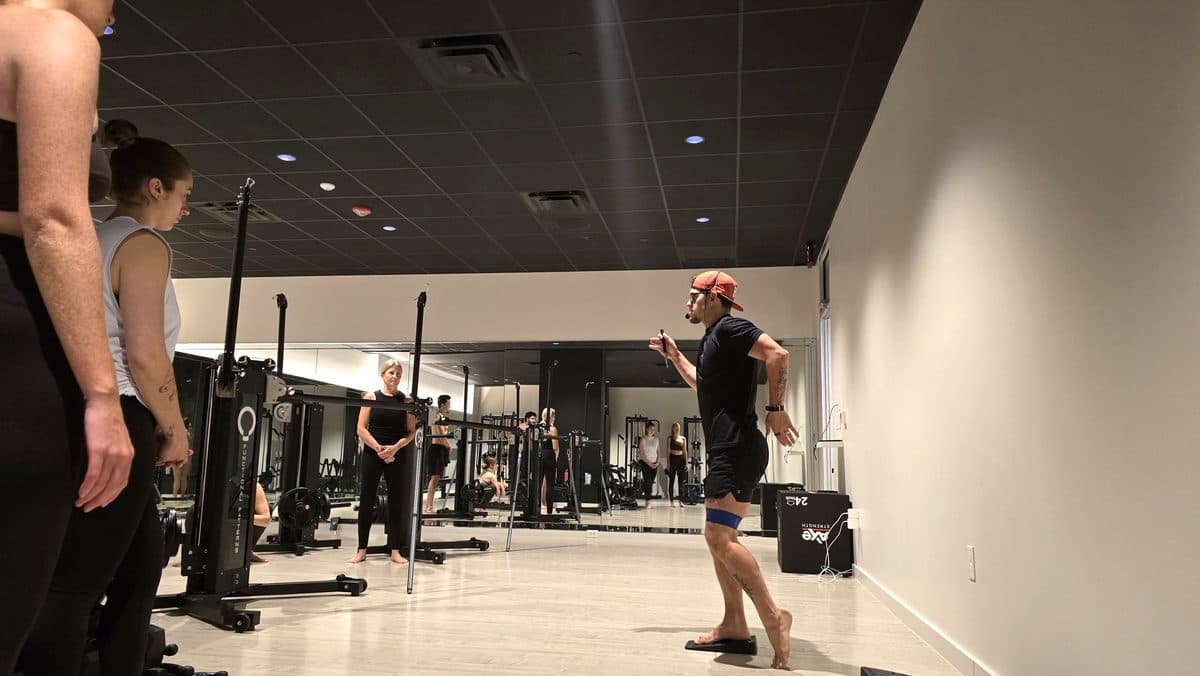
Assess how you actually move
Posture, gait, force transfer. We record what the body does under load, not what it does when it is standing still and thinking about it.
Read the chain
We find the pattern upstream of the symptom and explain it in plain terms, so you know why we are training what we are training.
Train it, then re-measure
Functional Patterns training aimed at the pattern, then a re-test against your own baseline.
Every training decision here comes from a measurement. That's the whole method.
The body works as a system. When one area can't do its job, another takes the load it wasn't built for. The place that hurts is usually the loudest link in a longer chain, not the origin. So we measure the chain before we train any part of it.
Functional Patterns is the training system we use. It organises training around gait, posture and how force travels through the body, rather than around isolated muscles.
Measure
We begin every relationship with an assessment. AI-driven posture analysis, gait video, breath patterns, structural alignment, and a full history. The measurement isn't a formality. It is the entire reason the work that follows is targeted. Without real numbers, training is guessing in expensive clothes.
Map
Once we have the data, we build the plan. It is specific to your body, your work, your sport, and your goals. The plan sequences corrective patterns first, structural progressions next, performance work after. Most clients leave their first session understanding why their previous routines were not getting them anywhere.
Move
Then we train. Real coaching, real feedback, sessions structured around the four core human patterns: stand, walk, run, throw. Progress is measured and re-measured. The blueprint adapts. As Kristie puts it, "strength without alignment only magnified what was already misaligned." So we build alignment first and load it after.
Who this is for
The Method works for a wide range of people. The common thread is the desire to train in a way that respects how the body is actually built.
Pain & movement limitations
Chronic back, neck, joint, or postural pain that hasn't resolved with conventional approaches. We measure the structure first, then build the work that addresses the root.
Posture & mobility
Forward head, rounded shoulders, anterior pelvic tilt, and the long list of postural patterns that office work and gravity quietly compound. All trainable.
Athletic performance
Runners, lifters, golfers, cyclists, fighters. If your sport is asymmetric, your body is too. We help you make sure the asymmetry doesn't end your training window.
Everyday function
The ability to pick up your kids, carry groceries, get off the floor, and travel without paying for it the next week. Functional in the literal sense.
Long-term health
Training that compounds over decades, not training that wears you down. The work is designed to keep working at 60, 70, and 80.
Postpartum recovery
Pelvic floor, core integration, gait reorganization. Postpartum-aware programming that meets your body where it actually is.
"How you move determines how long you can keep moving well." Benjamin Merworth, Director of Performance
"I stopped training habitually and started training intentionally." Benjamin Merworth, Director of Performance
The four core human patterns
Functional Patterns is built around four movements that humans have always done. Train these well and the rest of life gets easier.
- Stand. Posture under load. The base of every other pattern. Misaligned standing posture is the upstream cause of most pain we see.
- Walk. Gait is the most-repeated pattern in human life. We analyze it, train it, and re-test it. Get gait right and most knee, hip, and low-back complaints start to resolve.
- Run. An accelerated version of walk. Same mechanics, higher load. We coach the pattern that translates to your sport, not generic cardio.
- Throw. Rotational power. The pattern that brings the shoulder, ribcage, hips, and feet together. The most demanding and the most revealing.
The full explainer, with costs, who it suits and the evidence: Functional Patterns in Austin.
More than exercise
- Recovery: infrared sauna, PEMF, lymphatic compression, HaloRed O2.
- Nutrition: food and recovery data aligned with your training.
- Lifestyle: sleep, stress, daily movement.
- Fitness Analytics: InBody, VO2 max, HRV, lab panels.
See your own baseline
Meet with a movement specialist, discuss your goals and concerns, tour the studio, and learn how our assessment and training process can help you move better.